
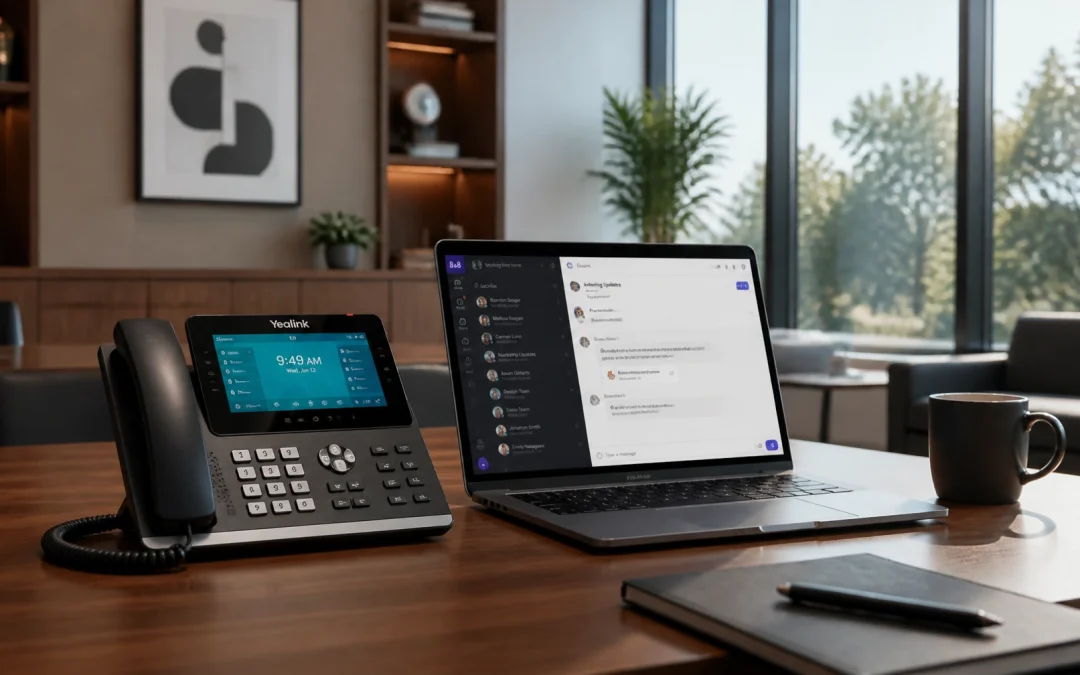
Empower your organization with state-of-the-art communication tools by avoiding the hidden pitfalls that undermine traditional and poorly configured phone setups. Transitioning to a cutting-edge cloud based phone system represents a visionary leap for growing enterprises, yet countless business owners and IT managers inadvertently sabotage their investment through avoidable deployment errors. Whether you are scaling operations or modernizing legacy infrastructure, understanding these missteps ensures you unlock the full, robust potential of your telecommunications.
Discover the seven critical mistakes businesses make with their small business voip service, along with actionable, expert-backed strategies to secure flawless performance, enhanced security, and unmatched operational efficiency.
1. Choosing Your Provider Based on Headline Price Alone
Evaluate your true expenses by looking beyond the initial per-user sticker price. Focusing exclusively on the lowest monthly fee often conceals a steep total cost of ownership (TCO) driven by unexpected surcharges for SMS overages, advanced AI tools, premium integrations, and rigid support tiers.
- The Fix: Build a comprehensive 12-month TCO model accounting for active seats, anticipated call volumes, setup fees, and hardware requirements. Send identical operational assumptions to prospective providers and demand a worked quote in writing. Partner with industry leaders like PBXPros to secure transparent, flexible plans that align seamlessly with your operational budget.

2. Skipping a Rigorous Network Readiness Assessment
Transform your voice quality by eliminating packet loss, jitter, and bandwidth bottlenecks before deployment. Turning on a business voip phone system over an unoptimized network inevitably results in frustrating audio drops, latency spikes, and frustrating one-way conversations during peak operational hours.
- The Fix: Conduct thorough pre-deployment bandwidth audits. Allocate approximately 100 kbps of dedicated bandwidth per simultaneous call to guarantee pristine audio clarity. Deploy a business-grade router configured with Quality of Service (QoS) rules to prioritize SIP voice packets over routine file downloads and video streams.
3. Ignoring Reliability, Uptime Guarantees, and Failover Protocols
Secure absolute business continuity by refusing to accept vague assurances that "the cloud is always up." Neglecting to verify documented Service Level Agreements (SLAs) and geo-redundancy leaves your customer service vulnerable during unexpected ISP outages or data center disruptions.
- The Fix: Insist on robust SLAs backed by transparent credit policies and multi-location data redundancy. Equip remote and mobile team members with softphone applications that automatically reroute calls to cellular devices if primary internet connections falter. Explore our enterprise-grade architecture on our about us page to see how we maintain uninterrupted connectivity.

4. Neglecting Seamless CRM and Workflow Integrations
Enhance daily productivity by eliminating manual data entry between disparate software tools. Adopting a disconnected communication platform forces your staff to toggle endlessly between windows, slowing down customer service response times and inflating administrative overhead.
- The Fix: Prioritize hosted pbx for business solutions that offer robust, two-way CRM and helpdesk integrations. Request live product demonstrations featuring real-time data synchronization across custom customer fields. Discover how our customizable communication ecosystems streamline workflows by visiting our contact us page to schedule a personalized demo.
5. Overlooking Essential Security Protocols and Encryption Standards
Safeguard sensitive client data and corporate communications by hardening your network defenses from day one. Leaving default administrator credentials unchanged or deploying unencrypted signaling leaves your telecommunications vulnerable to malicious eavesdropping and toll fraud.
- The Fix: Enforce rigorous security standards immediately. Change all default passwords on IP handsets and admin portals, and mandate Transport Layer Security (TLS) for signaling alongside Secure Real-time Transport Protocol (SRTP) for media streams. Ensure your provider maintains compliance certifications relevant to your industry.
6. Skipping Comprehensive Employee Training and Adoption Plans
Maximize your technological investment by ensuring your team is fully equipped to leverage advanced call management features. Assuming staff will intuitively master automated attendants, call queues, and voicemail-to-email workflows leads to underutilized capabilities and frustrated employees.
- The Fix: Implement structured, role-specific training sessions during rollout. Provide concise reference guides covering headset best practices, mobile app navigation, and seamless call transfers. Empower your workforce to embrace new communication tools with confidence and enthusiasm.
7. Attempting Complex DIY Deployments Without Expert Support
Accelerate your digital transformation by partnering with seasoned telecom specialists rather than navigating complex configurations entirely in-house. DIY rollouts frequently suffer from misconfigured VLANs, improper NAT traversal settings, and absent emergency failover plans.
- The Fix: Rely on dedicated, 24/7 expert customer support to handle the technical complexities of porting numbers, configuring QoS, and optimizing network topology.
Unlock seamless communication today. Get started with PBXPros and experience unmatched reliability for your business.
Frequently Asked Questions
Can I keep my existing phone numbers when switching to PBXPros?
Yes! Absolutely. We handle the entire number porting process seamlessly so your clients experience zero interruption in reaching your business.
Do I need to purchase expensive new hardware to get started?
No. While we offer state-of-the-art IP desk phones, our cloud PBX solutions are fully compatible with softphone applications on your existing computers, laptops, and mobile devices.
What happens to my phone service if our office internet goes down?
Absolute continuity is built into our platform. Incoming calls can be instantly redirected to mobile apps or backup forwarding destinations, ensuring your business never misses a beat.
Are there long-term contracts required for small business plans?
No. We offer flexible month-to-month plans with no long-term contracts, paired with completely free setup for new customers.
