
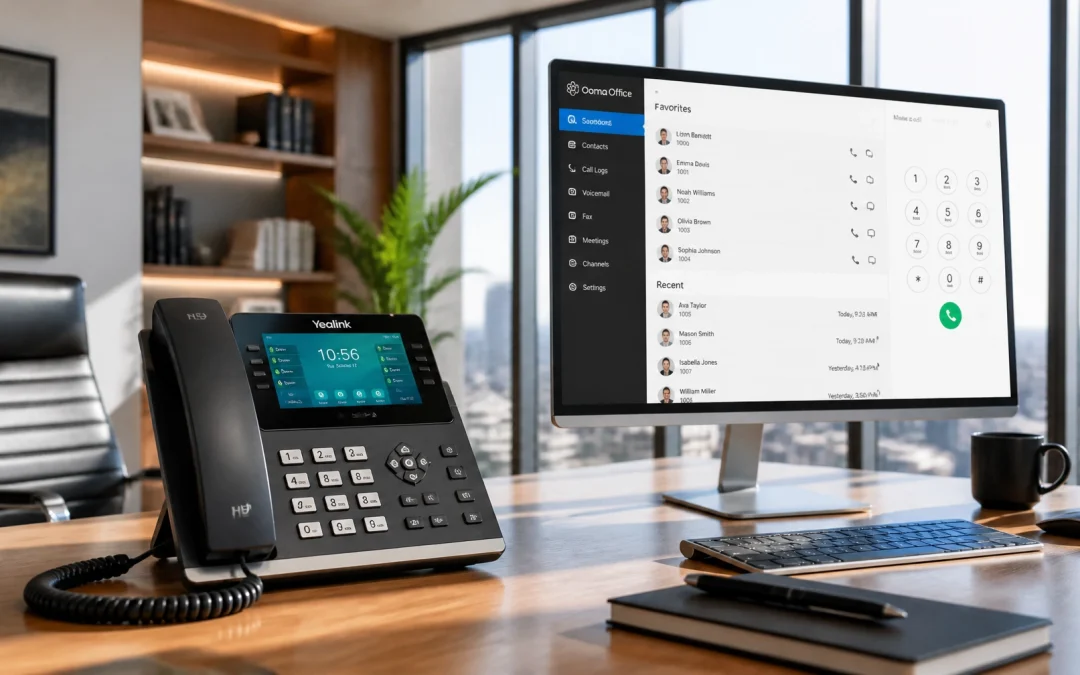
Running a small business in 2026 means managing rising costs, hybrid teams, demanding customers, and increasingly complex communication needs. Your phone system should simplify those challenges: not add another layer of technical complexity.
A modern small business VoIP service gives you a smarter way to make and receive calls over the internet. Instead of relying on expensive traditional phone lines or maintaining on-site PBX hardware, you can manage business communication through a flexible, cloud-based platform.
With the right provider, you can reduce communication expenses, improve customer experiences, support remote employees, and scale your system without costly infrastructure upgrades.
Discover Why Small Business VoIP Service Matters in 2026
Traditional phone systems often require dedicated hardware, extensive wiring, expensive maintenance, and complicated upgrades. They can also make it difficult for employees to work effectively from home, in the field, or across multiple locations.
A cloud-based VoIP system moves your communications infrastructure online. Your team can use business numbers and advanced phone features through compatible desk phones, desktop applications, and mobile devices.
This transformation gives your business:
- Greater flexibility: Let employees make and receive calls from virtually anywhere with a reliable internet connection.
- Faster scalability: Add users, extensions, phone numbers, and departments without installing new physical lines.
- Lower infrastructure costs: Avoid purchasing and maintaining an expensive on-site PBX.
- More professional service: Use automated attendants, call queues, custom greetings, and voicemail-to-email.
- Stronger visibility: Review call analytics to identify missed calls, peak periods, and service improvements.
Industry research commonly identifies VoIP as a cost-effective alternative to traditional business phone systems. For additional background, review the U.S. Chamber of Commerce guide to VoIP phone system benefits.
Cut Costs with Predictable Cloud-Based Communication
A well-planned small business VoIP service can reduce your total cost of ownership in several ways. Your savings will depend on your current provider, call volume, features, and number of employees, but the financial advantages are often substantial.
Eliminate Expensive Hardware and Maintenance
Traditional PBX systems require hardware, wiring, upgrades, and technical support. Cloud PBX solutions transfer much of that responsibility to your service provider. You gain access to state-of-the-art features without managing the underlying infrastructure yourself.
You typically need only:
- A reliable high-speed internet connection
- Compatible IP desk phones, computers, or mobile devices
- A VoIP plan suited to your business requirements
Reduce Per-Call Expenses
Many VoIP plans include domestic calling minutes or unlimited calling options. International calling can also be more affordable than traditional long-distance services, depending on your destinations and plan structure.
Review all pricing details carefully, including:
- Per-user or per-line charges
- Included minutes
- International calling rates
- Number porting fees
- Hardware costs
- Advanced feature add-ons
- Contract requirements
PBXPros offers flexible plans, including options for small teams, growing companies, and larger organizations. Explore the current PBXPros Plans & Pricing to compare available configurations.
Protect Your Budget with Flexible Terms
Month-to-month plans give you more control as your business changes. You can add or remove users without committing to a long-term telecommunications contract that may no longer fit your needs.
Enhance Productivity with Advanced Call Management
Your employees should spend their time serving customers and completing high-value work: not manually transferring calls or checking multiple voicemail systems.

Use these powerful features to streamline daily operations:
- Auto-attendants: Direct callers to sales, support, billing, or other departments through a professional menu.
- Call queues: Organize incoming calls and distribute them across available team members.
- Ring groups: Alert several employees at once to improve answer rates.
- Call forwarding: Send calls to another extension, mobile device, or backup number.
- Business-hour routing: Create different workflows for open hours, holidays, weekends, and emergencies.
- Voicemail-to-email: Receive voicemail notifications and messages directly in your inbox.
- Call recording: Support training, quality assurance, and internal review where appropriate.
- Call analytics: Monitor call volumes, missed calls, answer times, and employee performance.
These tools help you create consistent processes while reducing delays and preventing important customer calls from slipping through the cracks.
Empower Remote and Hybrid Teams
Your business number should not be tied to one desk or one physical office. A modern small business VoIP service allows employees to stay connected whether they work from headquarters, home, a client location, or while traveling.
Employees can use softphone applications on computers and smartphones to:
- Make outbound calls using your business number
- Receive inbound calls without sharing personal numbers
- Transfer customers to colleagues
- Check voicemail from any approved device
- Maintain access to call history and business contacts
- Collaborate with team members in real time
This mobility improves responsiveness and helps your company maintain a professional presence across locations. It also supports business continuity when severe weather, building access issues, or other disruptions prevent employees from working in the office.
Strengthen Customer Experiences with Smarter Routing
Customers expect fast, convenient, and professional communication. Long wait times, unanswered calls, and confusing transfers can quickly damage trust.
Use your VoIP system to build a seamless customer journey:
- Greet callers with a polished, branded welcome message.
- Route sales inquiries directly to the right team.
- Prioritize urgent support calls.
- Offer callers useful self-service menu options.
- Send unanswered calls to an organized voicemail process.
- Forward after-hours calls to an on-call employee or backup number.
- Review analytics to identify recurring customer service bottlenecks.
You can also connect your phone system with CRM, help desk, ticketing, or business productivity tools when supported by your provider. These integrations give employees more context during conversations and reduce repetitive data entry.
Secure Your Business Communications
Security should remain a central consideration when selecting a small business VoIP service. Your phone system may carry confidential customer, financial, operational, and employee information.
Prioritize a provider that uses robust security practices, such as:
- Multiple layers of encryption
- Secure user authentication
- Administrative permissions
- Fraud monitoring
- International dialing controls
- Network redundancy
- Regular system maintenance
- Responsive technical support
You should also protect your account internally. Require strong passwords, enable multi-factor authentication when available, restrict administrator access, update network equipment, and review call logs for unusual activity.
PBXPros provides cloud-based communication solutions designed with security, reliability, and ongoing support in mind. Learn more through the PBXPros About Us page.
Implement Your New VoIP System with Confidence
A structured rollout helps you minimize disruption and achieve faster adoption. Follow this practical implementation plan:
- Audit your current system: Record your monthly costs, phone numbers, call volume, common pain points, and essential features.
- Define user requirements: Identify which employees need desk phones, mobile access, call recording, queues, or administrative privileges.
- Design call flows: Map your main greeting, department routing, business hours, holidays, overflow rules, and voicemail process.
- Confirm number portability: Ask your provider to port existing business phone numbers so customers can continue reaching you.
- Test the network: Verify internet speed, Wi-Fi performance, router configuration, and headset quality.
- Train your team: Show employees how to answer, transfer, place on hold, forward, and manage calls.
- Review performance: Use analytics after launch to refine staffing, routing, greetings, and plan selections.
PBXPros provides free setup for new customers and handles the technical complexity, helping your team move forward with greater confidence.
Compare PBXPros Plans for Your Business
PBXPros offers communication plans designed to support different business sizes and operating requirements:
- Starter Plan: Includes voicemail and 100 minutes for smaller teams.
- Plus Plan: Adds softphone and desk phone support with 500 minutes.
- Business Plus Plan: Includes voicemail, IVR, faxing, custom voice-over, and 1,000 minutes.
- Enterprise Plan: Provides unlimited minutes and premium capabilities for larger organizations.
- Custom Plan: Lets you configure features around your unique workflows.
You can also explore compatible business communication hardware through the PBXPros Phones page.
Answer Common Questions About Small Business VoIP Service
Is VoIP a good choice for a small business?
Yes. VoIP gives small businesses access to scalable calling, advanced call management, mobile connectivity, and predictable plan options without the infrastructure burden of a traditional PBX.
Can I keep my existing business phone number?
Yes. PBXPros supports phone number porting, allowing you to preserve the number your customers already recognize. Confirm eligibility and timing during setup.
Do I need expensive new equipment?
No. You can use compatible IP desk phones, desktop softphones, mobile applications, and a reliable internet connection. Your provider can help determine the best equipment mix.
Will VoIP support remote employees?
Absolutely. Employees can make and receive business calls through supported computers and mobile devices while maintaining a consistent business identity.
Does PBXPros require a long-term contract?
No. PBXPros offers flexible month-to-month plans, giving you more freedom to adapt as your team and communication needs evolve.
Unlock More Efficient Communication in 2026
The right small business VoIP service can do far more than replace traditional phone lines. It can reduce costs, automate repetitive tasks, connect distributed teams, improve customer service, and give you the flexibility to scale with confidence.
Evaluate your current phone expenses, identify your operational bottlenecks, and select a platform that combines robust features with dedicated support. With PBXPros, you can access state-of-the-art cloud PBX solutions, flexible plans, free setup for new customers, number porting, and reliable business communication.
Contact PBXPros today and unlock seamless communication for your business.